Direct Marketing Policy
JOTTER: Journal of Teacher Training and Educational Research is committed to conducting direct marketing and journal promotion in an ethical, transparent, respectful, and professional manner.
The purpose of JOTTER’s direct marketing activities is to increase awareness of the journal, improve the visibility of published research, attract relevant manuscript submissions, invite qualified reviewers, inform readers about new publications, and support scholarly communication in teacher education and educational research.
JOTTER may promote the journal through its website, calls for papers, email announcements, reviewer invitations, editorial board invitations, newsletters, search engine optimization, social media, academic networks, institutional communication channels, and other relevant scholarly platforms.
All direct marketing communications issued by JOTTER must clearly identify the journal, the sender, and the purpose of the communication. Information provided through emails, websites, social media posts, calls for papers, announcements, or other promotional materials must be accurate, current, and not misleading.
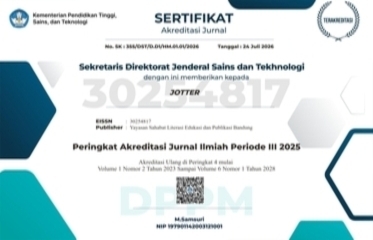
JOTTER will not make false or exaggerated claims regarding indexing status, accreditation, impact metrics, acceptance rates, publication speed, peer-review outcomes, editorial board membership, or journal reputation.
JOTTER will respect applicable privacy and data-protection requirements in all direct marketing activities. Personal contact information will only be used for legitimate journal-related communication and will not be sold, rented, traded, or shared for unrelated commercial purposes.
Recipients of non-essential promotional communication may request to unsubscribe or opt out from receiving future messages. Essential communications related to manuscript submission, editorial decisions, peer review, publication, journal accounts, or legal and security matters may still be sent where necessary.
JOTTER will ensure that direct marketing activities are targeted and relevant to the recipient’s academic field, expertise, institutional role, or previous interaction with the journal. The journal will avoid excessive, intrusive, repetitive, deceptive, or unsolicited mass communication.
Marketing messages will be sent at reasonable intervals and in a manner that respects recipients’ preferences. JOTTER will not use spam-like practices, harassment, misleading invitations, or aggressive solicitation of manuscripts or reviewer participation.
JOTTER may use search engine optimization, website improvements, and social media communication to improve the discoverability of the journal homepage, published articles, editorial information, author guidelines, and calls for papers. Such activities must remain accurate, ethical, and consistent with the journal’s academic mission.
Direct marketing activities must not influence manuscript evaluation, reviewer selection, peer-review outcomes, editorial decisions, acceptance, rejection, revision requests, or publication scheduling. Editorial decisions remain independent and are based solely on academic merit, originality, methodological quality, ethical compliance, relevance to the journal’s scope, and peer-review assessment.
JOTTER will periodically review and monitor its direct marketing practices to ensure compliance with this policy, applicable laws, privacy principles, anti-spam requirements, and ethical publishing standards.
Questions, complaints, or concerns regarding JOTTER’s direct marketing practices may be submitted through the official JOTTER contact email.